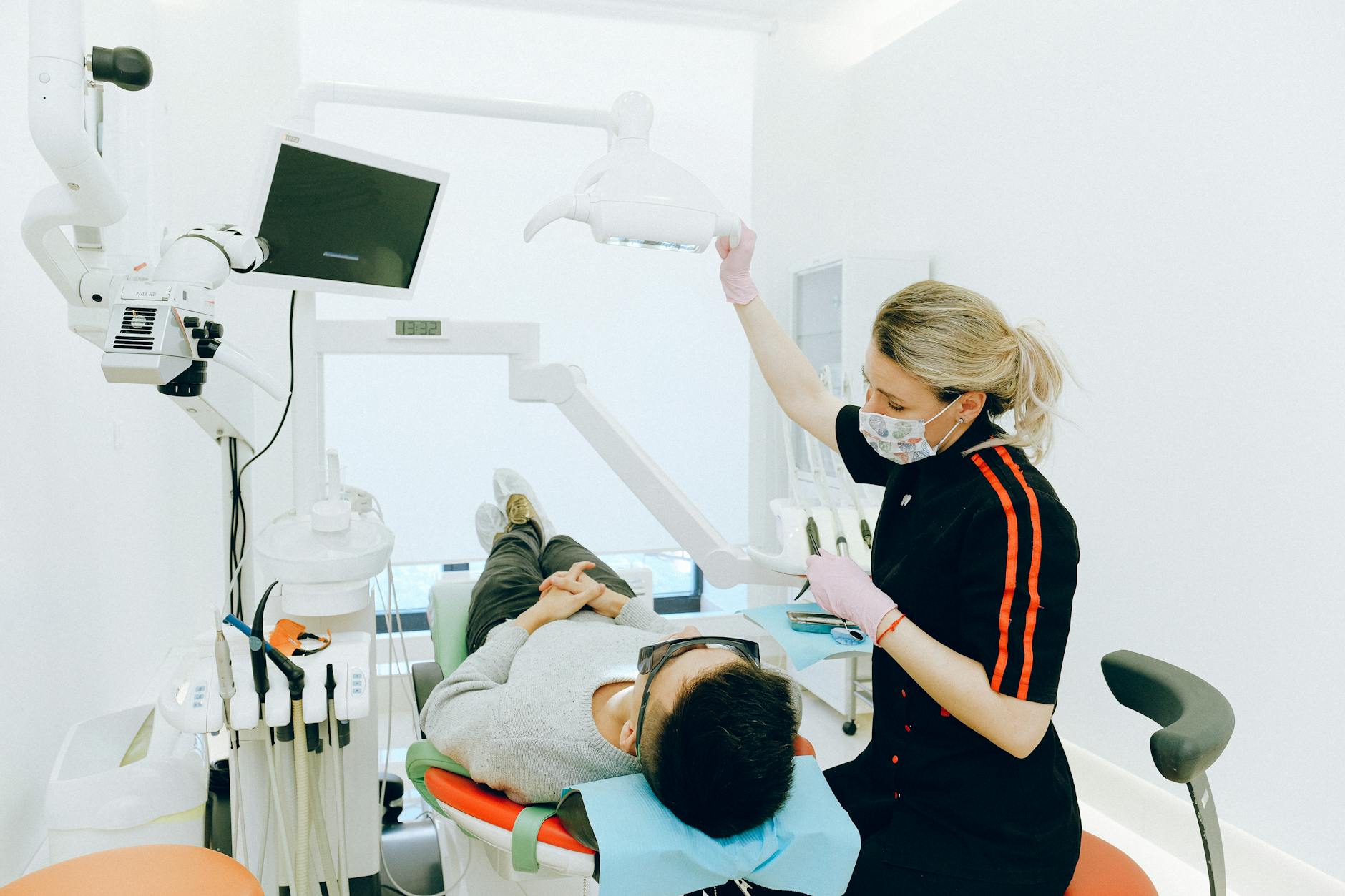
Having patients return is essential, both to ensure continuation of treatment plans and to maintain income flows. What factors affect the patient’s decision to come back to the practice or hospital service?
One recent paper from Saudi Arabia uses the SERVQUAL tool to explore this decision. SERVQUAL is a way of measuring service quality. Developed in the 1980’s to measure quality in services, rather than in goods, it has enjoyed wide application. The method focuses on ‘search, experience and credence properties’ ( Parasuraman et al., 1985). Search properties are information a customer, or in our case patient, can gather about a service in advance. Experience properties are the experience of using the service. Credence applies to issues on which customers / patients cannot easily form a judgment, such as the technical quality of a treatment. As technical qualities are so difficult for a patient to evaluate, the SERVQUAL developers propose that credence is largely based on things patients can see in their search in advance, and in what they experience in the service. This indicates that a service with good customer / patient experience and good search qualities is also likely to be assumed to have a good technical standard. SERVQUAL compares what people expect from a service to what they report, and aims to identify areas for services to improve.
SERVQUAL has been widely used in healthcare, as well as other service settings. Other approaches are available including SERVPERF. This scale places attention only on experience of the services rather than on expectations of the service (Cronin and Taylor, 1992). There are criticisms of the properties of the now venerable SERVQUAL survey, and of its applicability in healthcare, but various services report finding value in its use.
Sharka et al. (2024) applied SERVQUAL to a University Dental Teaching Hospital in Saudi Arabia and looked at intention to re-attend. They found that two-thirds of the variance in attention to re-attend was described by three factors:
Staff-related factors: On its own, this accounted for 27% of the differences in intention to re-attend. These factors included knowledge, clinical expertise, and interpersonal skills.
Cost-Effectiveness: Unsurprisingly, cost and value for money was important.
Responsiveness: 18% of the variation. This included ‘taking in, evaluating, and quickly addressing requests, comments, queries, and concerns from patients’.
This was a dental teaching hospital in one setting, so it is important not to over-generalise findings. The finding that staff-related factors were the most important single group of issues does seem plausible. Cost is predictably influential. The importance of responsiveness is striking. This indicates that appointment waiting times; behaviour of reception staff; speed of response to problems and addressing concerns affect re-attendance intention.
This work adds to the evidence that the behaviour of the extended staff group, and the practice booking and response systems, are vital in creating a positive impression of a service. This feeds into intention to come back to the service.
References
Cronin, J., Taylor, S. A. (1992). Measuring Service Quality:
A Reexamination and Extension. Journal of Marketing,
56(July), 55-67.
Parasuraman, A., Zeithaml, V. A., Berry, L. L. (1985). A Conceptual Model of Service Quality and Its Implications for Future Research. Journal of Marketing, 49(4), 41–50. https://doi.org/10.2307/1251430
Sharka, R., Sedayo, L., Morad, M., Abuljadayel, J. (2024). Measuring the impact of dental service quality on revisit intention using an extended SERVQUAL model. Frontiers in Oral Health, 5, 1362659. https://doi.org/10.3389/froh.2024.1362659
Photo by Anna Shvets on Pexels.com
 Dental Quality Improvement
Leave a comment