Plan Do Study Act (PDSA) cycles are at the heart of most quality improvement efforts. PDSA cycles appeal to health care staff because they are based on evidence. You plan the change, predict the impact, undertake the improvement, and measure its impact. We’ll cover more on the approach in future additions to this website.
Louise Campbell and her colleagues from the Dental School in Dundee, Scotland, provide a good dental example of PDSA cycles in action.
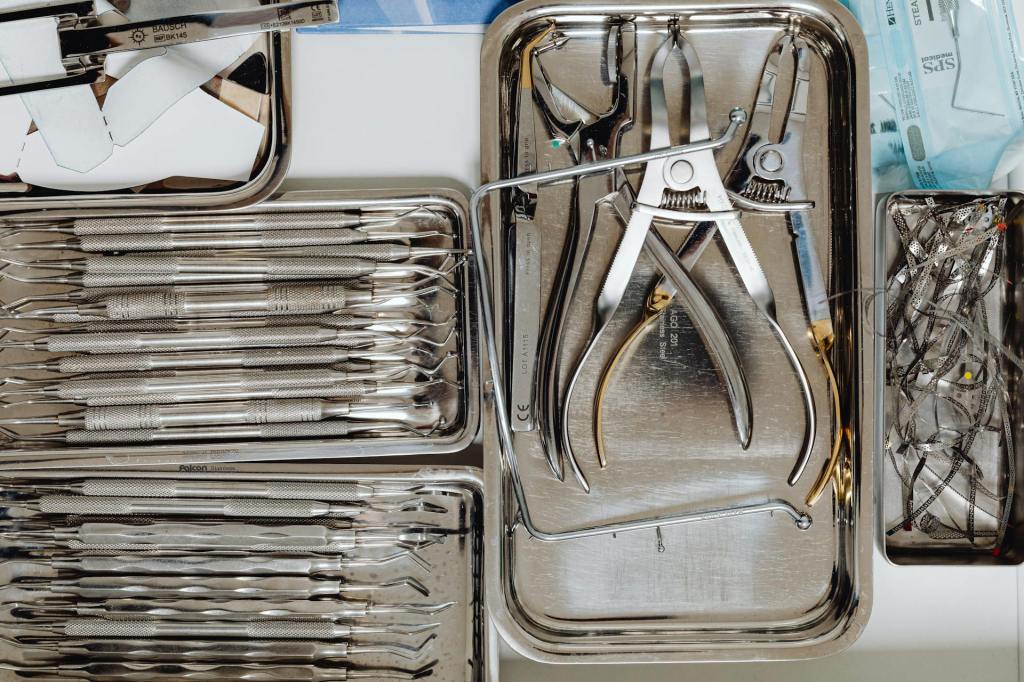
In a paediatric dentistry clinic they noticed that some clean instruments sets, when opened, proved to include instruments with residual cement. The instruments had to be discarded to be returned for further cleaning, because it was impossible to be sure that the area under the cement was not contaminated. This resulted in re-work, as the same instruments were sent back for further cleaning, and could cause delays while replacement instruments were sourced.
Previous work in Dundee had found that almost 37% of instrument packs had instruments with residual cement. When the team looked at the reasons, they found that the dental hospital’s contract with the sterilisation unit did not include manual inspection of the returned instruments. They had no power to change the contract, so they decided the only way open to them to resolve the problem was to ensure that there was no cement on instruments before they were sent for sterilisation.
Over the course of five PDSA cycles, the team first confirmed that the problem remained widespread, although not quite as high as previously measured, at 27% of kits examined. As a result they developed, tested and implemented a countermeasure. The action was to have instruments inspected by the clinicians involved, and for them to remove any residual cement before the kit was returned.
The intervention was successful, and at the end of the project the contamination rate was around 7%, a marked improvement on the two previous measurements of 37% and 27%.
There are several things worth highlighting from this teams work:
- They did not rely on anecdote, or even on previous local evidence. The team counted the problem before they embarked on improvement action.
- The work involved the wider clinical team, rather than the improvement team alone. They discussed the problem with their ‘senior clinician, head dental nurse, and patient safety lead’, and also obtained feedback from the wider clinical team on their solution.
- The work was scaled. When they were ready to try the intervention, the team initially tested it with one student, and revised their work based on the feedback, before testing it again with a larger group.
- The results were presented on a run chart, which is a good visual way of sharing results.
- There was some fall off in results, which is common. It’s difficult to keep everyone focused on a problem over time, and further work can be required to embed standard work.
The team’s reflections included the importance of team work. They also noted the wider dental team’s lack of familiarity with QI methods, an issue we have returned to several times on this site.
Their paper is an interesting example of PDSA cycles in dental care, and is worth reading for anyone interested in dental QI.
Photo by Karolina Kaboompics: https://www.pexels.com/photo/dental-steel-instruments-6627733/
 Dental Quality Improvement
Leave a comment